
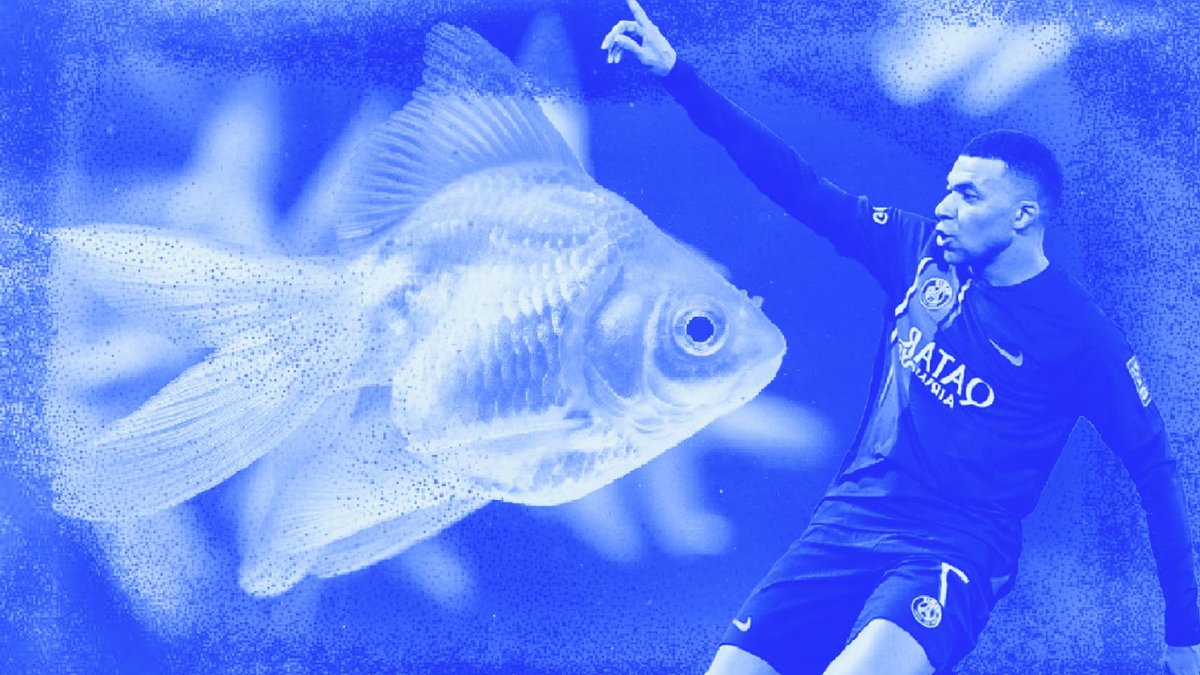
The World Cup has seen its fair share of predictors, from pundits to chatbots, but one unlikely contender has been making waves – a goldfish named Swimbappé. The goldfish, who lives in a Toronto storefront tank, calls matches by swimming toward one of two flags at either end, and has achieved an impressive 80% accuracy rate midway through the group stage.
Swimbappé’s handlers had counted 14 correct calls against four misses, with draws ruled as no-contests. This year, however, artificial intelligence is giving the goldfish some competition. Dutch research bureau Onder set five AI programs – ChatGPT, Claude, Gemini, Copilot, and Perplexity – an identical task, predicting all 104 matches.
Onder sealed the AI programs’ answers and has been marking each prediction right or wrong on a public scoreboard. The tracker ScoreGPT grades the five models every matchday morning, and their individual-match accuracy has run between 50% and 60%. None of the AI programs have matched the goldfish’s accuracy rate.
The machines’ best call of the tournament came before a ball was kicked, with four AI tools surveyed in June naming Spain, France, England, and Argentina as the semifinalists. They also picked Spain to beat France in the final, but this scenario is now dead since the two teams met in the semifinals instead.
Swimbappé is not the only animal predictor in the tournament. The craze for animal predictions at football’s biggest tournament traces back to Paul the Octopus, who called eight of eight in 2010, including the final. Other animals, such as Shaheen, an Emirati camel, and Achilles, a deaf cat in Saint Petersburg, have also made predictions.
Related: Gulf has billions for AI but still needs Nvidia
A hawk in Dubai, Shawk, has forecast more than a dozen matches this year and got most of them right, including France over Morocco in the quarterfinals. Thai zoos have also put tigers and hippos on forecasting duty, with Moo Deng, a celebrity pygmy hippo, choosing between flag-marked watermelons to call both semifinals.
In the middle of the tournament, it’s worth considering the broader context of these predictions. While AI models can process large amounts of data, they often lack the unpredictability and instinct that animals seem to possess. This unpredictability can sometimes lead to surprising accuracy, as seen in Swimbappé’s predictions, which involve online behavior that is difficult for AI to replicate.
As the tournament comes to a close, Swimbappé will make his pick before Sunday’s kickoff. The accuracy of AI models has been inconsistent, with Copilot failing to predict four group matches in one day, all of which ended in draws.
With the final match approaching, the world waits to see who will be crowned the champion. Only time will tell, but one thing is certain – Swimbappé and the other animal predictors have brought a new level of excitement and unpredictability to the tournament.
As the tournament draws to a close, the FIFA World Cup has once again proven to be an event that brings people together, with predictions and surprises around every corner.