
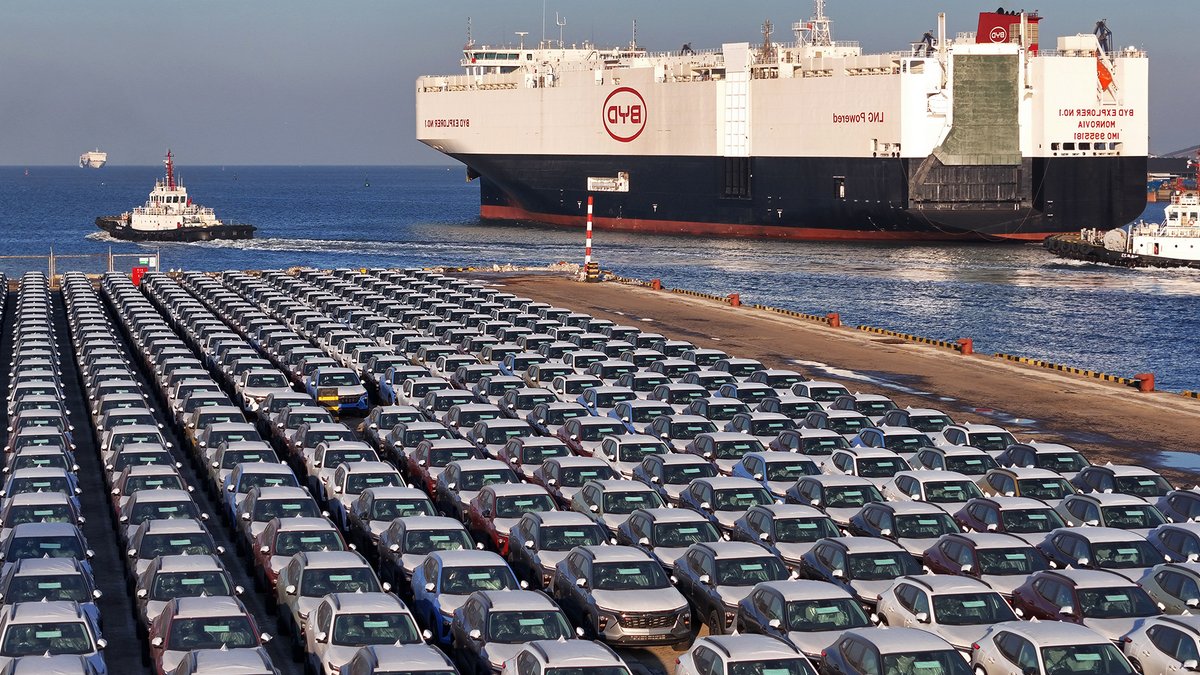
China’s BYD is expanding its shipping fleet to keep up with demand as wars push freight costs higher and trade routes become more dangerous. The world’s largest electric vehicle manufacturer plans to increase its number of car-carrying cargo ships to 18 from 8 by 2029, according to shipping industry reports. Each new vessel will have a capacity of about 9,200 cars and will be built by China Merchants Industry.
Renting a car carrier with space for roughly 6,500 vehicles now costs $95,000 per day, up from $50,000 in February, according to Clarksons Research. The increase is driven by conflicts in the Red Sea and around the Strait of Hormuz, which have forced ships to take longer routes around the Cape of Good Hope. This adds about 25% to the distance and up to 14 days to each voyage.
Chinese owners account for only about 10% of global car carrier capacity, including ships on order. This leaves Chinese automakers reliant on international shipping companies, exposing them to market swings. Owning its fleet could cut BYD’s cost to ship each car abroad by as much as 40% compared with renting carriers, according to one industry estimate. BYD aims to sell more than 2.5 million cars overseas next year, up from a target of 1.9 million to 2 million this year. Owning its fleet cushions against higher shipping bills and gives the company more control over space and routes.
The geopolitical volatility and cost fluctuations make logistics a critical part of BYD’s strategy. In 2022, the company announced a $687 million plan to build its own car carriers. Founder Wang Chuanfu called a shortage of shipping capacity a major obstacle to exports. Between January 2024 and September 2025, BYD put eight such carriers into service.
BYD ships only electric vehicles and plug-in hybrids, which require specially configured vessels. Most of its fleet runs on liquefied natural gas, a choice that aligns with tightening green-fuel rules at ports. Rival Geely began running its first car carrier in 2025, on a long-term charter from London-based Zodiac Maritime. Chery set up a venture with Wuhu Shipyard in 2023 to build car carriers for its own fleet in eastern China.
Market response and domestic trends
Domestic sales in China have cooled despite the expansion. Industrywide sales of electric vehicles and plug-in hybrids fell 12% in the first eight months of the year. This drop followed a government cut to tax breaks for buyers. BYD sold 33% fewer cars at home over the same period.
Many Chinese manufacturers have redirected their production toward foreign markets. Changes to tax and subsidy incentives have reduced demand at home. Car makers have kept their factories busy by exporting surplus vehicles. This trend suggests that exports are rising faster than overseas registrations. In September, the company sold 180,700 cars outside China, more than double a year ago and almost 40% of its monthly total sales.