
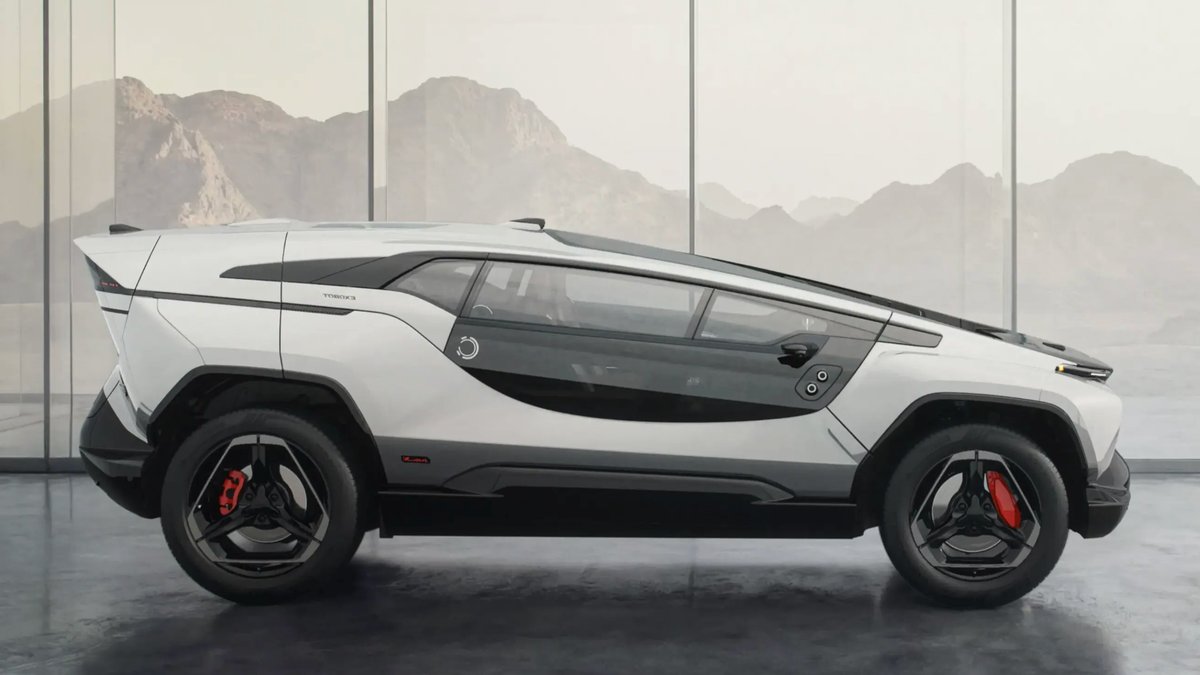
Saudi Arabia has unveiled its first domestically produced electric vehicle manufacturer, Ceer Motors, which is poised to challenge a US-based rival in which the kingdom has a significant stake. On September 21, Ceer Motors, majority-owned by the Public Investment Fund, unveiled two electric car models, with plans to commence deliveries in March 2027. The vehicles were designed and engineered in Saudi Arabia and will be manufactured at Ceer’s facility in King Abdullah Economic City, located north of Jeddah.
A Diversified EV Portfolio
The Public Investment Fund’s investment in Ceer Motors represents its third foray into the electric vehicle sector. Previously, the fund had acquired a 5% stake in Tesla in 2018, only to sell off most of its shares by the end of 2019. Additionally, the fund has invested approximately $8 billion in California-based Lucid, which has yet to achieve profitability.
Ceer Motors’ entry into the market sets the stage for an intriguing rivalry, as Saudi Arabia is now developing its own electric vehicle brand while its sovereign wealth fund maintains a majority stake in Lucid, whose primary manufacturing facility is located in Arizona. Ceer Motors can be seen as a strategic hedge against Lucid, whose stock price has plummeted by over 60% this year, and whose sales in Saudi Arabia are declining in a market dominated by China’s BYD.
Ceer has a different mandate, creating a Saudi automotive OEM and, importantly, an indigenous industrial ecosystem.”
Ceer Motors, a joint venture between the Public Investment Fund and Taiwanese electronics manufacturer Foxconn, was established in November 2022. Initially, the company had aimed to launch its first vehicles in 2025. However, during a recent announcement, Ceer Motors’ CEO, James DeLuca, revealed that production would commence early next year. The company has planned a series of additional models over the next five years and aims to locally manufacture nearly half of its vehicle components by 2034.
The Exobot sedan and SUV, Ceer Motors’ inaugural offerings, are high-performance premium electric vehicles that compete directly with Lucid’s Air luxury sedan and Gravity SUV. The most powerful Exobot variants boast over 1,100 horsepower, according to DeLuca, which is comparable to the 1,234 horsepower of Lucid’s fastest vehicle, the Air Sapphire sedan. Pricing for the Exobot models has not been announced.
Russo noted, “That does put the initial products closer to Lucid’s premium territory than to BYD’s mass-market center of gravity.” Hashim AlFatayerji, CEO of Cararak, added, “BYD and Lucid serve very different segments, so comparing their volumes directly can be misleading.”
Lucid, in which the Public Investment Fund holds a significant stake, is currently facing significant challenges. As a result, Lucid’s market value has declined to around $1.6 billion.
In Saudi Arabia, Lucid’s sales declined by 57% during the first seven months of 2026, while BYD’s sales surged by 369%, according to estimates from Focus2Move, a Rome-based firm that tracks car sales in over 150 countries. AlFatayerji attributed the disparity to pricing differences, stating, “BYD and Lucid serve very different segments, so comparing their volumes directly can be misleading.”
Despite Lucid’s struggles, the Public Investment Fund has maintained its support for the company. Lucid remains one of only five US companies in the fund’s latest quarterly holdings filing, and the Saudi government has agreed to purchase up to 100,000 Lucid vehicles over a period of 10 years.
Competing in a Chinese-Dominated Market
As Ceer Motors expands its operations, it will face intense competition from Chinese rivals that currently dominate the regional market. According to the International Energy Agency’s Global EV Outlook, BYD accounts for approximately 60% of electric car sales in the Middle East, while Tesla holds around 15% of the market.
Russo said, “Saudi Arabia gives Ceer the resources and runway to attempt that, but it doesn’t eliminate those competitive tests.”