
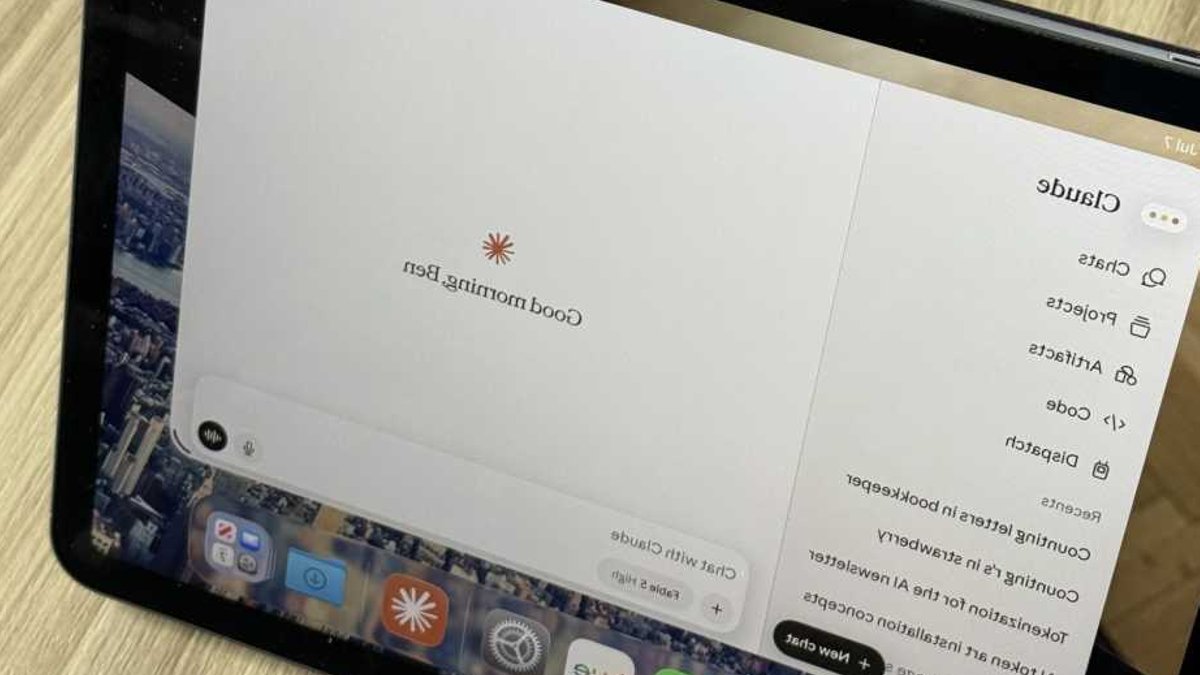
Starting on August 2, 2026, every word generated or edited by Anthropic’s AI assistant Claude will carry an invisible digital watermark, making it easier to detect AI-produced content. This measure is part of a broader effort to address growing concerns about the authenticity and origin of digital materials in an era where AI tools are increasingly integrated into professional, academic, and creative workflows. The watermarking system is designed to function seamlessly in the background, ensuring that users can continue leveraging Claude’s capabilities without disruption while still adhering to regulatory requirements.
Watermarks required by EU law
The change stems from the European Union’s AI Act, which mandates greater transparency for content created or processed by artificial intelligence. One of its key provisions requires AI providers to implement mechanisms that allow users and regulators to identify AI-generated or AI-modified content. Anthropic announced that all new Claude models released in the EU on or after August 2, 2026, will embed these watermarks by default. The company is also working to add the feature to older models, though the process may vary depending on technical constraints and model architecture.
Anthropic plans to roll out the watermarks globally, covering all Claude products—including Claude Cowork, Claude Code, and the Claude API. The requirement applies to any text or file Claude touches, whether it’s a line of computer code, a corporate report, or a job application. This means that even minor edits, such as grammar corrections or sentence restructuring, will trigger the watermark.
How the watermark works
The watermark is woven directly into the text through subtle, algorithmic modifications to the output’s linguistic patterns. Unlike visible watermarks or metadata that can be stripped away by reformatting, this method embeds the signal at the structural level of the content. For example, the system might adjust word choice, sentence length, or punctuation in ways that are imperceptible to human readers but detectable by specialized software. This ensures the mark remains intact even after copying, pasting, or light editing, such as rephrasing or trimming sections of a document. For image files like SVGs, PNGs, and JPEGs, Claude will attach provenance metadata instead, which includes details about the file’s creation, such as the model version used and the timestamp of generation. This metadata is stored within the file’s properties and can be accessed through standard image-editing tools or custom detection software.
Related: Windows 11 Weather app is memory hog
Anthropic says it will release detection tools for the public, though details on those tools are still forthcoming. The company has indicated that the watermark doesn’t always mean the content was fully AI-generated—human-written text edited by Claude will also carry the mark, as the system cannot distinguish between original and modified material at the point of processing. There may also be cases where Claude-touched content isn’t watermarked, such as when the content is “heavily” edited, too short, or produced by a Claude model that doesn’t yet support watermarking.
This shift could make it harder to pass off AI-assisted work as entirely human-made. For job seekers, students, or professionals using Claude to draft or refine documents, the watermark might raise questions about authorship, particularly in contexts where originality is highly valued. Employers or academic institutions could use detection tools to screen submissions, potentially leading to discussions about the appropriate use of AI in creative or analytical tasks.
Industry response remains uneven
While Anthropic is moving ahead with watermarking, other major AI providers have been less specific. Google and Meta have pledged to comply with the EU AI Act, and OpenAI has said it will take a “layered approach” to transparency, suggesting a gradual implementation of measures rather than a single, standardized solution. None have yet detailed their own plans for watermarking text.
The EU’s rules apply to any AI company operating within its borders. Anthropic’s support page notes that the watermarking system is designed to be resilient but not foolproof. The company acknowledges that determined users might find ways to remove or obscure the marks, though doing so would likely require significant effort, such as manually rewriting large portions of text or employing specialized software to alter linguistic patterns.