
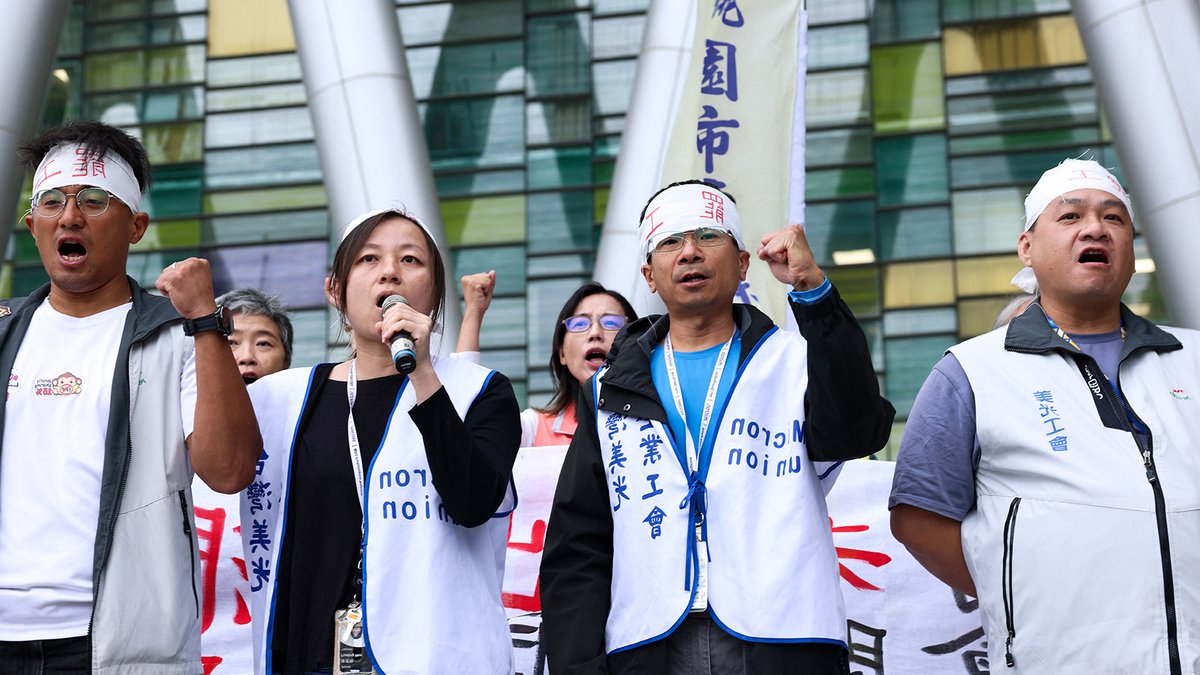
A rare strike at a Micron Technology plant in Taoyuan, Taiwan, has drawn attention to growing labor unrest in the global AI industry. In October, about a dozen workers staged a one-day strike—the first in Taiwan’s semiconductor sector—after failing to reach an agreement with the company on salaries and bonuses.
This strike, though symbolic, reflects broader discontent among workers in the artificial intelligence industry regarding profit distribution. Micron, a leading American memory chipmaker, reported record profits this year due to surging demand for AI chips.
Unions Demand Profit-Sharing
Unions at Micron’s Taoyuan and Taichung facilities have negotiated for a profit-sharing agreement similar to those at Samsung Electronics and SK Hynix in South Korea. Jerry Lin, president of Micron’s Taoyuan union, stated, Making a profit is perfectly fine, but the rank and file should get a share of the profit instead of this unequal distribution between high-level executives and the rank and file.
Micron employs over 15,000 workers in Taiwan, producing more than 60% of the company’s dynamic random access memory chips, essential for AI servers. A prolonged strike could disrupt global memory chip supplies, already under strain.
Rejected Deals and Ongoing Negotiations
In October, Micron announced an agreement with the Taichung union for higher salaries, quarterly bonuses, and increased pension contributions. However, many union members rejected the deal, claiming it was made in secret. A Taoyuan union member stated, We do not accept the deal. None of our demands were fulfilled.
Related Post: Ring unveils key-free smart lock with manual dial recharge
The Taoyuan union, with over 2,300 members, remains open to striking. Micron has expressed respect for workers’ lawful rights and is committed to constructive engagement with both unions. Labor relations professor Wu Yu-ren noted that these actions signal a shift, with semiconductor workers increasingly organizing for greater transparency and a fairer share of the value they create.
Membership in Micron’s unions has surged from around 440 to over 13,000 in recent months. Earlier this year, employees at Taiwan Semiconductor Manufacturing Co. also discussed unionizing over pay concerns.
Traditionally, Taiwan’s high-tech companies have used benefits and bonuses to deter unionization. However, soaring demand for high-end memory has driven up share prices and corporate profits, making workers question how those gains are distributed. Labor actions at Samsung and SK Hynix have further influenced Taiwan’s tech workers to unionize.
Former labor minister Pan Shih-wei predicts that discussions about strikes and profit distribution will become more common. The gap between beneficiaries of the AI boom and those left behind is widening globally, with U.S. startups creating 19 billionaires worth a combined $59 billion in the past year.
In Taiwan, negotiations between Micron and the Taoyuan union continue, with the government urging both parties to reach an agreement.
Read Also: Africa Seeks Local AI Control to Safeguard Mobile Money Systems
The impact of a brief production stop would likely be limited, but prolonged strikes could disrupt supplies to companies like Nvidia and affect Taiwan’s economy, where semiconductors contribute over 20% of GDP.
President Lai Ching-te emphasized the need for corporations and employees to support each other, while the Ministry of Labor pledged assistance in facilitating dialogue. Building constructive labor-management relationships before disputes escalate remains a challenge, according to Pan Shih-wei, who believes the Micron dispute could spark a wider labor movement as younger workers become more rights-conscious.
High-tech companies are urged to reevaluate their labor relations, as discussions about strikes and profit-sharing become increasingly prevalent. The outcome of these negotiations will shape labor relations in Taiwan’s semiconductor industry, with potential global implications.
The Ministry of Labor has pledged to facilitate dialogue between Micron and the Taoyuan union, aiming for a swift resolution.
According to Pan Shih-wei, Taiwan’s reliance on government intervention in labor disputes and the lack of direct communication channels between companies and workers can escalate conflicts. Establishing open dialogue is essential to prevent misunderstandings and support better labor relations.