
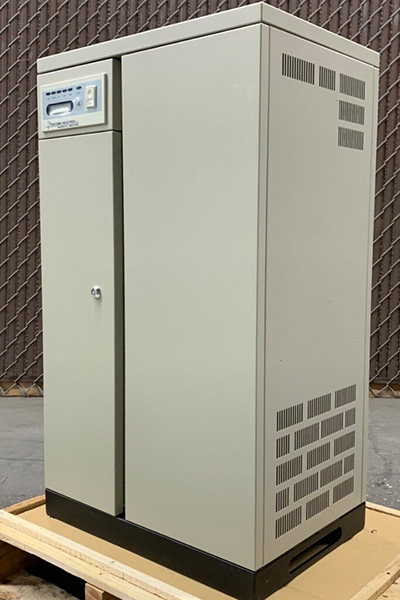
Modern frequency converters cut industrial electricity consumption by up to fifty percent by matching motor speeds directly to real-time operational demand. Traditional electric motors run continuously at full capacity, relying on mechanical dampers, valves, or brakes to throttle output—a process that wastes massive amounts of power as heat and friction. Frequency converters alter the supplied electrical frequency and voltage, adjusting motor velocity precisely to match system requirements. Optimizing motor output slashes utility bills, reduces carbon emissions, and extends machinery lifespans across heavy industrial environments.
Eliminating Throttling Losses in Fluid and Air Handling Systems
Installing variable speed drives on industrial pumps and fans eliminates the energy waste caused by mechanical throttling devices. In standard fluid systems, electric motors run at maximum speed while mechanical valves close down to restrict flow rates, forcing the motor to push against artificial resistance. Adjusting motor speed electronically allows fluid handling systems to deliver exact flow rates without wasting energy against closed valves.
This dramatic reduction in energy consumption follows affinity laws, where power demand decreases by the cube of the motor speed. Reducing fan or pump speed by just twenty percent cuts power consumption by nearly half. Eliminating mechanical throttling reduces system pressure, preventing pipe stress, water hammer, and premature valve failure throughout fluid transport networks.
Minimizing Peak Current Spikes with Soft-Start Capability
Frequency converters eliminate dangerous electrical surges by accelerating electric motors gradually during system startup. Direct-on-line motor starts draw up to eight times their rated full-load current, creating severe voltage drops and driving up peak demand charges on utility bills. Modern frequency conversion technology smoothly ramps up supply frequency and voltage, keeping starting currents well within normal operating parameters.
Controlled acceleration protects mechanical components like gearboxes, belts, and couplings from sudden torque spikes. Eliminating mechanical shocks reduces mechanical wear, lowers maintenance expenses, and prevents unexpected operational downtime. Facilities operating large motor arrays avoid utility penalties associated with peak current demand while expanding the operational lifespan of their heavy machinery.
Harnessing Regenerative Braking to Recapture Wasted Power
Advanced solid state frequency converters with active front-end technology capture braking energy from decelerating loads and feed clean electricity back into the facility power grid. Standard industrial drive systems dump braking energy into heavy resistor banks, converting kinetic power into wasted heat that requires additional air conditioning to dissipate. Regenerative drives convert that kinetic energy back into usable alternating current.
High-inertia equipment like industrial centrifuges, cranes, hoists, and downhill conveyors generate substantial power during deceleration cycles. Recapturing kinetic energy turns braking cycles into a secondary power source, significantly lowering overall facility energy consumption. Reusing captured power lowers heat loads inside electrical control rooms, reducing HVAC cooling costs and expanding component reliability.
Optimizing Overall Facility Power Quality and Efficiency
Integrating modern frequency conversion equipment optimizes total electrical power quality across industrial facility networks. Advanced converters incorporate active harmonic mitigation filtering, preventing voltage distortions that cause transformer overheating and electrical equipment damage. Maintaining clean power distribution preserves the operational integrity of sensitive electronics and automation controllers throughout the facility.
Intelligent drive systems interface directly with industrial control networks, supplying real-time energy usage data for facility management software. Visibility into power consumption trends enables plant managers to schedule energy-intensive operations during off-peak utility pricing periods. Combining real-time speed control, energy regeneration, and power monitoring elevates facility efficiency to modern operational standards.
Modern frequency converter technology offers an unparalleled opportunity to streamline industrial energy consumption and reduce operational overhead. Replacing outdated motor control systems with precise speed adjustment eliminates energy waste, lowers peak utility charges, and protects heavy equipment from mechanical wear. Strategic drive implementation safeguards your bottom line, enhances operational reliability, and establishes a sustainable foundation for long-term manufacturing growth.