
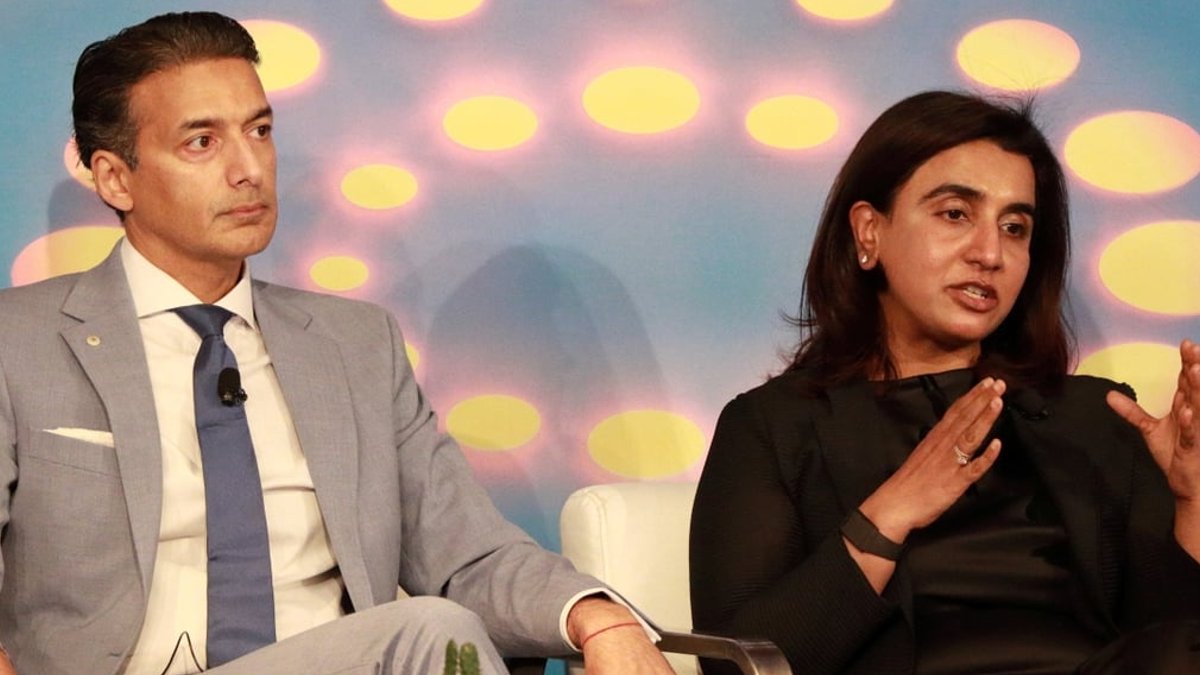
Charles Schwab’s chief strategy and innovation officer says the financial services giant is moving cautiously as it explores artificial intelligence applications. Nikhil Sudan told InformationWeek that patience is essential when dealing with the rapid pace of AI development in heavily regulated sectors.
Sudan said the firm watches how AI influences the market, but it must understand the technology’s functionality before deploying new tools. “We test a lot of things. It’s one thing to read about something in the paper. The second thing is to actually get your hands on it and test it out in a controlled environment,” he said.
For a company that holds client assets, Sudan said any new technology must maintain the trust given by customers. The firm must also ensure the tools do not violate regulatory, governance, or legal standards. In late September, Charles Schwab introduced Charley, an AI assistant designed to help clients manage their financial accounts.
Read Also: AI amplifies cybersecurity risks for businesses
“We take all those things into account and say, ‘Is there some utility that we can provide to clients in a scalable way?’ If the answer is no or not yet, then we just hold on,” Sudan explained. “We have more than enough things to do on our main products,” Sudan said. “We do pay attention and experiment and analyze and then decide when the right time is to offer something.”
Charles Schwab’s approach to AI aligns with broader industry trends where companies demand tangible results from pilots. Ampily Vijay, executive vice president and chief digital and technology officer for CBRE Investment Management, said she must consider the nature of the business problem a potential AI product addresses. She added that alignment with business sponsorship and financial value is critical for real estate investment management.
Vijay allowed for flexibility during experimental phases to improve features and reliability, but she stressed that a pilot must relate to business revenue or profits to sustain organizational support. If an AI pilot merely automates part of a workflow without adding value, she said the effort is not worth pursuing. “Don’t even get on it, don’t even bother,” she said.
Read Also: Managing AI Agents Gets More Complex
Google Cloud’s director of customer engineering for financial services, Colman Madden, noted that his team has shifted to working more closely with line of business units. Madden said his engineers spent time on trading floors to understand the workflows of capital market firms and apply those insights to AI development.
This hands-on approach is evident in how Charles Schwab built Charley. Sudan said the assistant is designed to meet customers’ preferred methods of interaction, allowing for human conversation when requested rather than forcing digital-only responses. “In some cases, they want to chat with us [via Charley]. In some cases, they want to use voice,” he said.
The assistant launched with a focus on essential support services, and Sudan said they plan to gradually expand features as the team becomes more comfortable with the model’s quality and its ability to govern AI actions.