
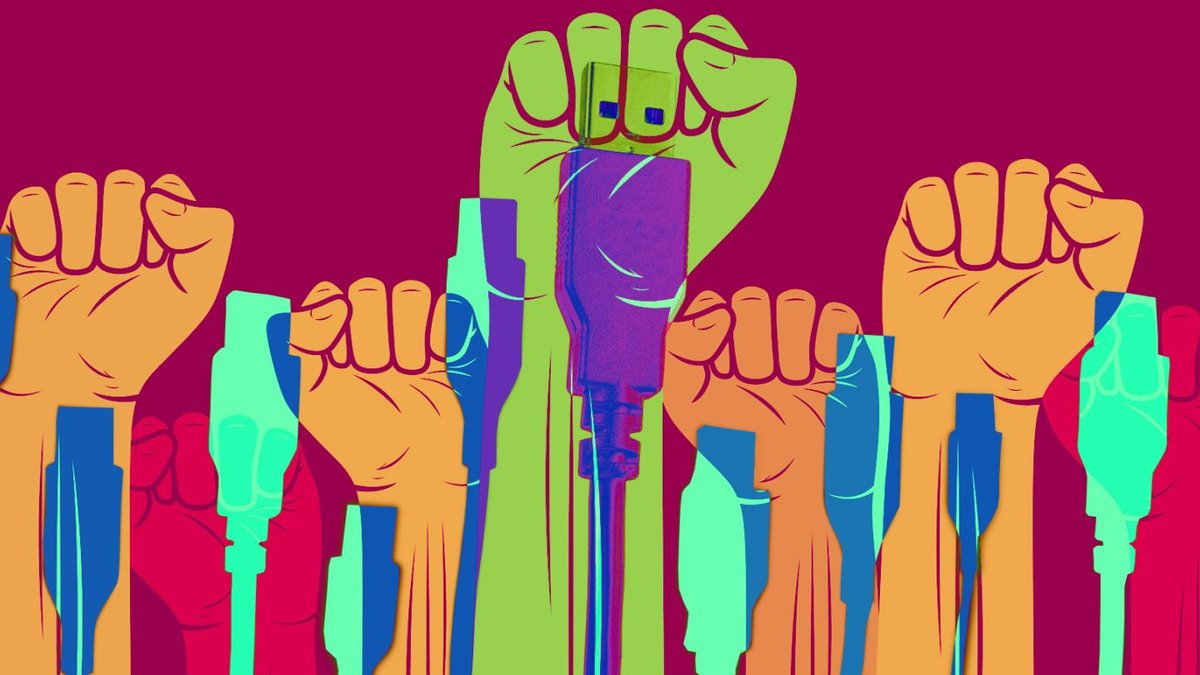
A growing pushback against big tech companies, and greater awareness of the value of data, is spurring interest in data collectives and cooperatives, which give communities control over the collection, management, and distribution of their data.
These alternative arrangements allow creators to benefit from data sets that may otherwise be ignored or misused, according to the report.
Data Collectives and Cooperatives
A handful of tech companies dominate the generative artificial intelligence industry, with American and Chinese frontier models controlling the lion’s share of the market, the document states.
Raffi Krikorian, chief technology officer at Mozilla Foundation, told journalists that communities that possess smaller or unusual data sets can gain from having control over them.
The nonprofit last year set up Mozilla Data Collective to provide a platform for such data sets from communities, organizations, and individuals around the world.
Responsible Use of Data
Astha Kapoor, co-founder and director of Aapti Institute, a tech research firm in India, said data collectives, or cooperatives, offer a blueprint for the responsible use of data, and ensure the value goes to those generating the data.
Beyond consent and compensation, collective action around data gives communities the opportunity to direct data towards issues they may care about, she said.
Related: Meta and YouTube ruling shakes global social media
Communities can negotiate the terms on which their data is used at every stage of the AI lifecycle, with mechanisms for accountability and redressal, in case their terms are breached, Kapoor explained.
The United Nations marked 2025 as the year of cooperatives, positioning them as essential solutions to today’s global problems, kindling renewed interest in data collectives and cooperatives.
Community-Led Initiatives
Workers, producers, consumers, and others have been establishing cooperatives and other community-led associations to pool resources, share benefits, and address socioeconomic challenges for centuries.
The Kerala Food Platform enables about 2,500 farmers in the southern Indian state to trace and market their produce, including rice, fish, fruits, and vegetables.
PescaData helps small-scale fishers in Latin America and the Caribbean to manage and benefit from their catch records, while the Native BioData Consortium is a repository of the genetic and environmental data of Indigenous people.
Increasingly, data sets are being created for AI-related purposes, including in low-resource language communities, whose data, including voice data, is valuable for training small models and creating speech recognition tools.
For these communities, a data collective is a more practical solution, Krikorian said.
Language Preservation
Meesum Alam, a Ph.D. candidate in computational linguistics at Indiana University, collected voice data in 39 languages from communities and local organizations in Pakistan, and put the data sets, totaling about 700 hours, on Mozilla Data Collective.
Related: AI takes on goldfish in World Cup test
The communities decided their data sets can only be used for research or non-commercial purposes, Alam said.
Challenges and Opportunities
Still, data collectives can face governance and scaling challenges, Kapoor said.
Building data cooperatives solely to steward data is not feasible because sustainability becomes an issue, and the only viable pathway becomes monetization of the data the cooperative is meant to safeguard, which is problematic, she said.
Earlier this month, the Mozilla Data Collective made three community-generated data sets available for paid commercial licensing, ahead of opening the compensation feature to all users.
For Alam, the benefit is clear: AI adoption is growing quickly, and for many communities, having their language data sets easily accessible through a data collective is the only way they can participate.
Every other day, he gets a text or a voice note from someone who is able to communicate with a chatbot in their own language for the first time.
It’s a very emotional thing for them when they can do that, Alam added, as it gives them a sense of connection to their language and culture.