
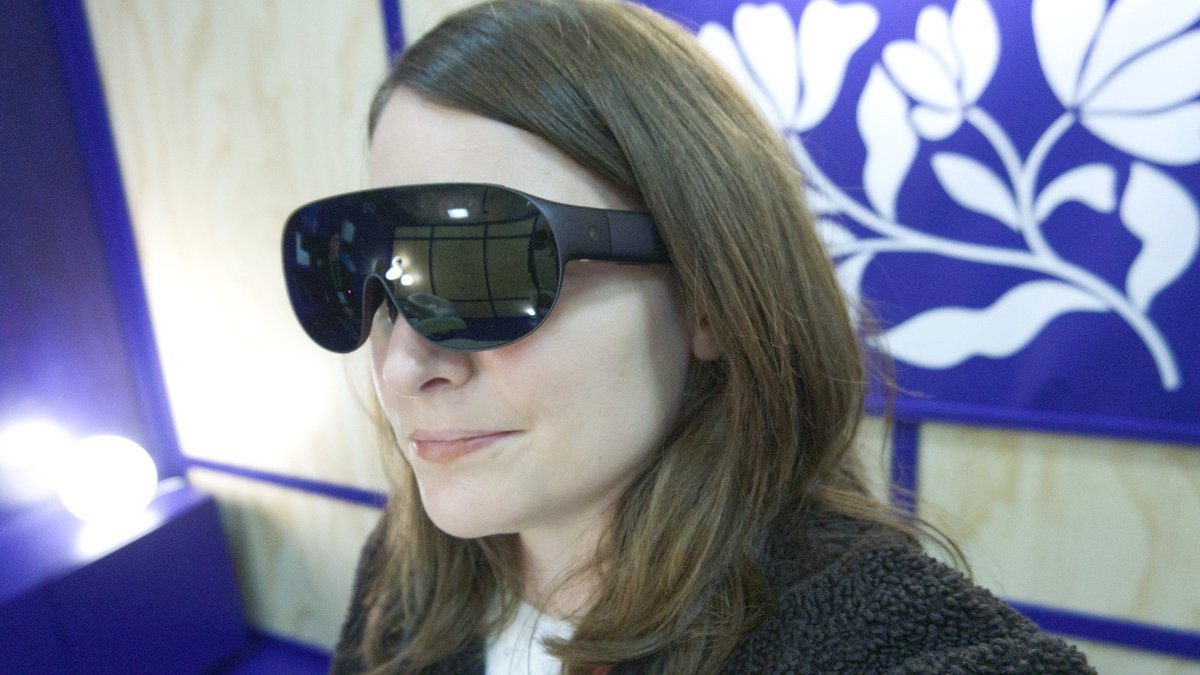
Meta has unveiled its new $1,299 VR Glasses, a mixed reality device that marks a departure from its traditional headset designs. The glasses, weighing under 100 grams, are paired with a 300-gram tethered puck for processing and storage. This new form factor represents a significant shift, offering portability and power but potentially disappointing longtime VR enthusiasts accustomed to more immersive setups.
Meta’s VR Glasses: A New Era for Virtual Reality
The device features four cameras for hand tracking and passthrough video, along with pancake lenses and integrated eye tracking. Users can interact using hand gestures and eye movements, eliminating the need for controllers. The display offers a 2,412 x 2,288 pixel resolution and a 70-degree field of view per eye, delivering sharp and clear content even in dimly lit environments. Small inserts are available for those requiring prescription lenses, ensuring accessibility for a wider audience.
While the glasses provide a sharp and immersive experience, they are less enveloping than traditional VR headsets. Meta positions the device for entertainment and productivity, allowing users to connect to a Mac or PC for remote desktop use. A virtual keyboard and trackpad, activated by placing hands on a flat surface, are also included, though the lack of haptic feedback may require some adjustment.
Meta’s focus on immersive entertainment and productivity could appeal to a broader audience, including those interested in Android XR or Apple Vision Pro.
The Meta VR Glasses are expected to ship next spring, with more updates anticipated in the coming months.
Hands-On Experience with Meta’s VR Glasses
One writer who tested the Meta VR Glasses noted that despite their name, they feel more like goggles due to their thickness and opaque lenses. However, they are surprisingly light, weighing under 100 grams, and feel secure during use. The glasses’ design is sleek, though the opacity of the lenses means passthrough mode is required to see the real world.
While the puck can be clipped to a pocket, its weight and heat output may make it uncomfortable for extended wear. During the demo, the puck remained on the table, emitting noticeable warmth without feeling overly hot.
Read Also: New AI firm aims to make autonomous agents legally traceable
Interaction and Display
The gesture system, similar to the Apple Vision Pro’s, is intuitive, allowing users to tap, swipe, and scroll with minimal effort. Eye tracking enhances the experience, making interactions feel more natural and powerful. However, there were occasional issues with gesture recognition, likely due to prototype hardware.
The writer noted that they couldn’t make out a single pixel, even in a dimly lit room. This level of clarity is a standout feature, particularly for mixed reality devices.
Meta positions the glasses as an entertainment and productivity device. The writer experienced immersive 3D content, including a Billie Eilish concert and an NBA game, which felt more engaging than traditional VR viewing. For productivity, the glasses can connect to a Mac or PC for remote desktop use, offering a three-window setup that can be repositioned or expanded into an ultrawide mode.
The virtual keyboard and trackpad, activated by placing hands on a flat surface, are functional but lack haptic feedback, which may take some getting used to. The limited field of view requires users to turn their heads to see the contents of each window, which might not suit all tasks. However, for design-focused work or vibe coding, this setup could offer unique benefits.
Meta’s VR Glasses represent a shift towards making VR hardware more broadly appealing, targeting users interested in Android XR or Apple Vision Pro. With their portability, lightweight design, and focus on immersive entertainment and productivity, they offer a unique experience that may attract a wider audience. I’ve only ever been a casual VR user, but I think it’s an approach that makes a lot of sense in 2026, even if it might be a disappointment to some VR fans.
As Meta continues to develop content and updates for the glasses, their potential uses and appeal are expected to expand.