
China’s RAM boom is here, and it is reshaping the hardware sector even if most consumers haven’t noticed yet. ChangXin Memory Technologies, or CXMT, is the latest memory supplier to make headlines after a massive stock debut in Shanghai. The company aims to fill the gap in the Dynamic Random Access Memory (DRAM) market as major manufacturers focus on “AI” technologies. This development could signal a shift in the global supply chain, but its impact on the average PC buyer remains to be seen.
CXMT is a relatively young and small player compared to the industry giants. The EE Times reported that the company completed its first domestic fabrication plant in Hefei back in 2019, marking it as the first memory manufacturer in China. It has since climbed to become the fourth-largest memory manufacturer globally, though the top three—Samsung, SK Hynix, and Micron—still dominate.
The immediate market reaction to its initial public offering was intense. Stock prices surged nearly 500 percent, raising approximately $8.6 billion. According to its filings, the company held a 7.67 percent global market share last year. While this percentage is small, the sheer volume of investment suggests the company is rapidly expanding its production capabilities.
Related: OpenAI Takes Large Dublin Office Space
For a laptop or desktop user, the arrival of a domestic Chinese supplier feels distant and abstract. The reality is that these components are often soldered directly onto motherboards, hidden inside systems sold by major OEMs. The benefit of increased supply is theoretical for the average buyer at this moment, who continues to face skyrocketing costs for hardware upgrades and repairs.
From Hefei to your PC
The new supply chain is beginning to show up in major hardware. Dell, Acer, and HP are currently investigating CXMT as a potential supplier to ease their own supply constraints and high costs. Lenovo, the world’s largest PC maker, has already integrated the company’s DRAM into at least a few models. Even Apple is looking at the supplier for products destined for the Chinese market.
Major consumer brands like Corsair have started using CXMT chips in their retail modules. However, initial testing suggests the quality is not on par with the latest offerings from the “Big Three.” Experts found the memory to be functional but older in design, consuming more power and lacking stability when overclocked. It is also worth noting that finding CXMT-branded sticks on store shelves is difficult, as the company primarily operates as a B2B supplier.
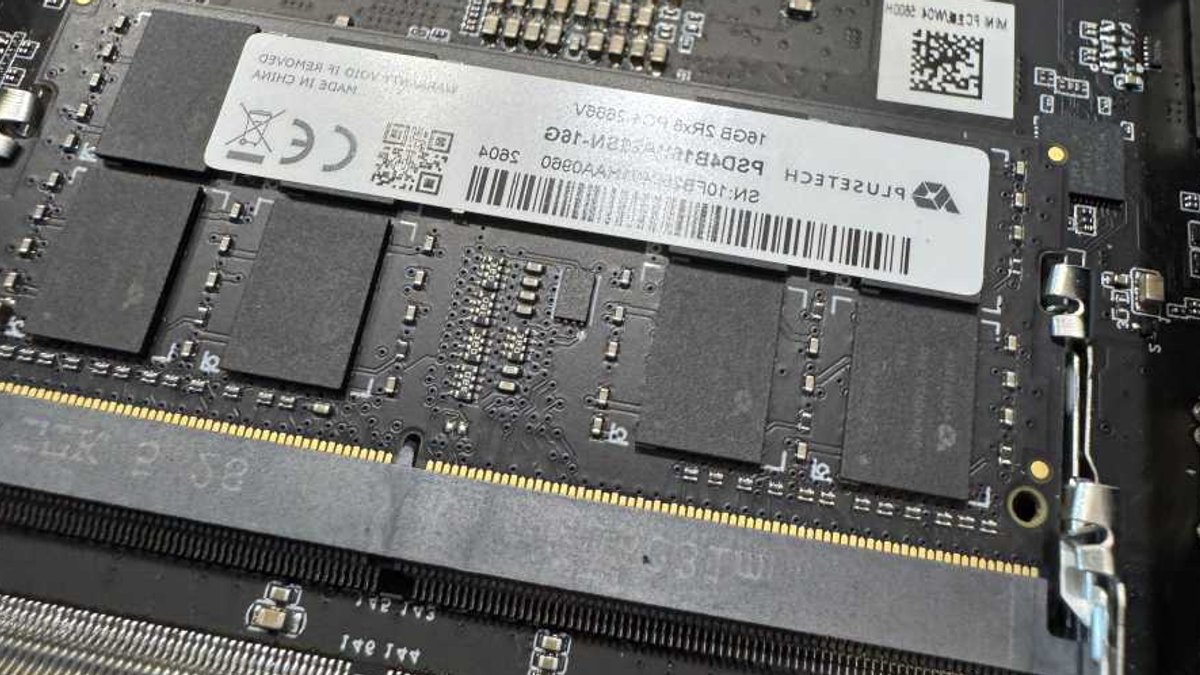
Incidentally, a recent review of an Alienware 15 unit revealed that even major brands haven’t fully switched suppliers yet, as the 16GB SO-DIMM in that specific device was SK Hynix. This indicates that while the technology is expanding, the transition is gradual and not yet uniform across the industry.
Related: Chinese universities drop language majors for AI
Will prices finally drop?
Despite the new supply entering the market, the data on pricing suggests a slow recovery. Analysis from PCPartPicker shows prices for DDR4 and DDR5 modules are currently flat, trending slightly upward. These costs remain approximately four to five times higher than they were in July 2025. While bulk buyers like Dell and Lenovo secure volume discounts, these savings are not yet trickling down to the consumer level.
The factors driving these high prices are complex and entrenched. A combination of post-COVID supply chain disruptions, a sudden surge in data center construction for “AI,” and a shift in manufacturing production toward high-margin HBM chips has created a bottleneck. HBM (High Bandwidth Memory) is the specialized memory used for AI training, which is significantly more profitable than standard DRAM. It takes significant time for new production lines to impact market pricing, especially when established giants are prioritizing data center revenue over consumer goods.
That leaves the industry at a standoff. The most optimistic views predict the shortage could last another year or two, while doomer scenarios suggest a decade of raised prices. While CXMT brings welcome competition to the market, it is unlikely to single-handedly reverse the trend toward expensive hardware in the near future.